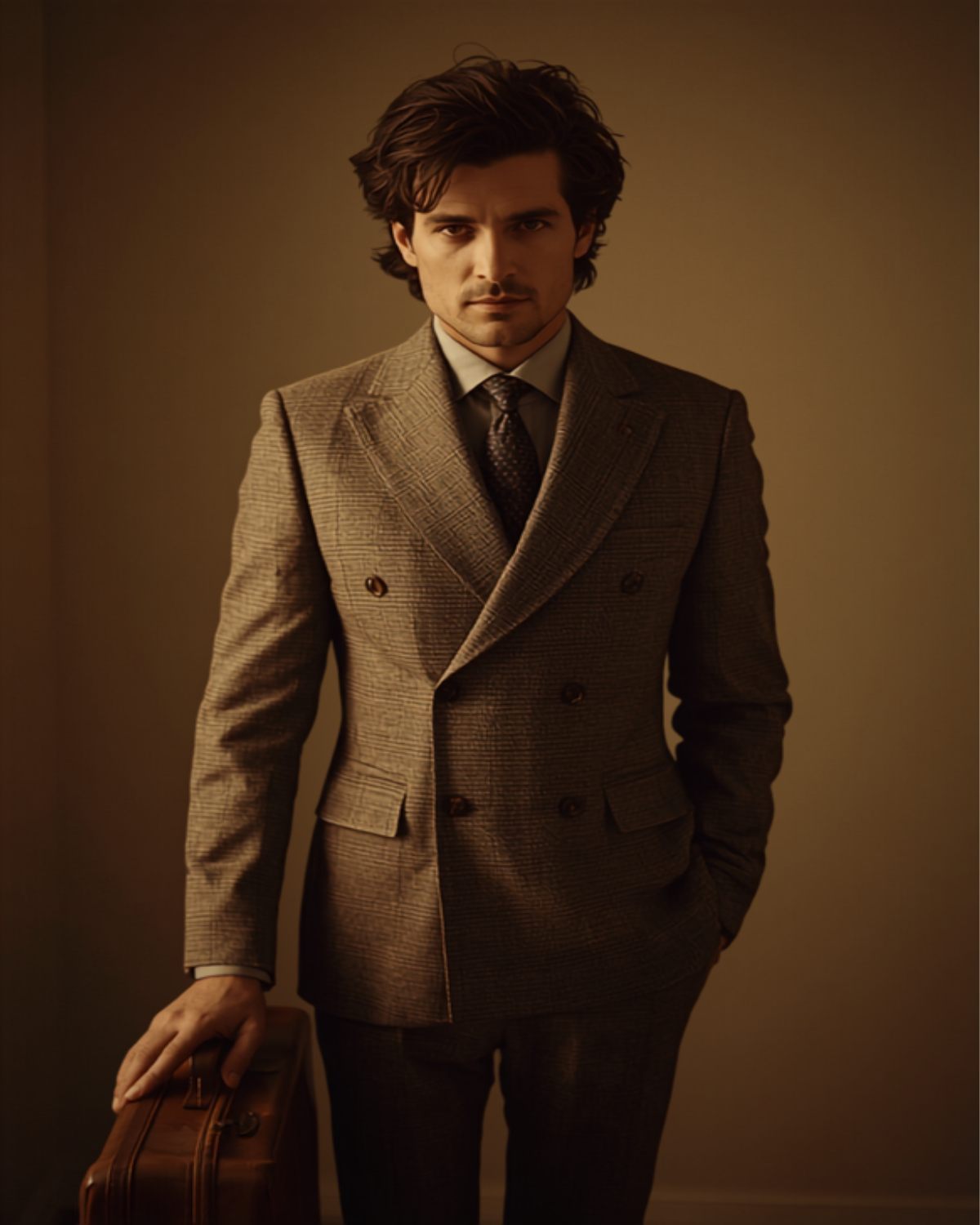
The long way round.
We buy cloth from half a dozen countries and make all of it in one. Everyone thinks that is a mistake. It is the point.
The cloth is milled in England, or Italy, or France, and occasionally somewhere we would rather not be drawn on. The making happens in one place only. So most bolts travel further than the people who will eventually wear them, and they do so for reasons that make no sense on a spreadsheet and perfect sense in a fitting room.
Most houses solve this by choosing a country and staying there. It is a good solution. We simply don’t use it — because loyalty to a mill is not the same thing as loyalty to the cloth, and only one of the two ends up on your shoulders.
You can tell the ones who understand this. They don’t ask why the cloth travels. They ask which bunch it came from, and then they ask to see it.
A worsted does not know it is expensive. It knows it is heavy, and honest, and that it will outlast the conversation about whether it was worth it. That is the whole argument, really. The cloth keeps its own memory. We just give it somewhere to keep it.
People say the long way round is a story we tell. It is not a story. It is a shipping cost, paid quietly, so that the cloth on the table is the right one rather than merely the near one. The garment never mentions it. Neither, ideally, will you.